IELTS Writing Task 1: Process Diagrams
Process diagrams are the one Task 1 question with no data in them. That removes the selection problem and replaces it with a grammar problem: almost every sentence needs the passive voice and a sequencer, and answers that use neither fall apart quickly.
What the question looks like
Either a man-made process — how something is manufactured, treated or produced — or a natural cycle such as a life cycle or the water cycle. You describe the stages in the order they happen.
The instruction line is the same on every Academic Task 1 question: Summarise the information by selecting and reporting the main features, and make comparisons where relevant. You have about 20 minutes and need at least 150 words.
The overview sentence
Count the stages, say where the process begins and ends, and say whether it runs in a line or repeats as a cycle. That one sentence covers almost everything the overview needs.
Overall, the process consists of six main stages, beginning with the collection of rainwater from domestic roofs and ending with treated water being pumped back to households.
How to structure the answer
- 1
Introduction
Paraphrase the prompt, naming the process.
- 2
Overview
The number of stages, the start point, the end point, and whether it is linear or cyclical.
- 3
Body 1
The first half of the stages, in order, with sequencers.
- 4
Body 2
The remaining stages through to the end, or back to the beginning if it is a cycle.
Language for process diagrams
Lexical Resource is a quarter of your Task 1 mark. These are the phrases this question type actually calls for.
- The passive, used throughout
- is collectedis then transferredare removedis finally pumped
- Sequencers
- initiallyfirst of allnextafter thatsubsequentlyonce this is completefinally
- For cycles
- the cycle then begins againat which point the process repeats
- Purpose
- in order toso thatwhich allows
- Naming stages
- at this stageduring this phasein the final step
Mistakes that cost marks
- Writing the whole answer in the active voice.
- Who performs the action is usually unknown and irrelevant. Use the passive.
- Not saying how many stages there are.
- It is the easiest overview point available on this question type. Count them.
- Explaining why the process exists or whether it is a good idea.
- Task 1 reports. Opinion and reasons belong in Task 2.
- Using 'then' to open every stage.
- Rotate through the sequencers. Repetition is marked under Coherence and Cohesion.
- Inventing detail the diagram does not show.
- Describe only labelled stages. Anything else risks factual error.
Process Diagrams: sample questions
Real process diagram questions in the exam format. Give yourself 20 minutes and 150 words for each.
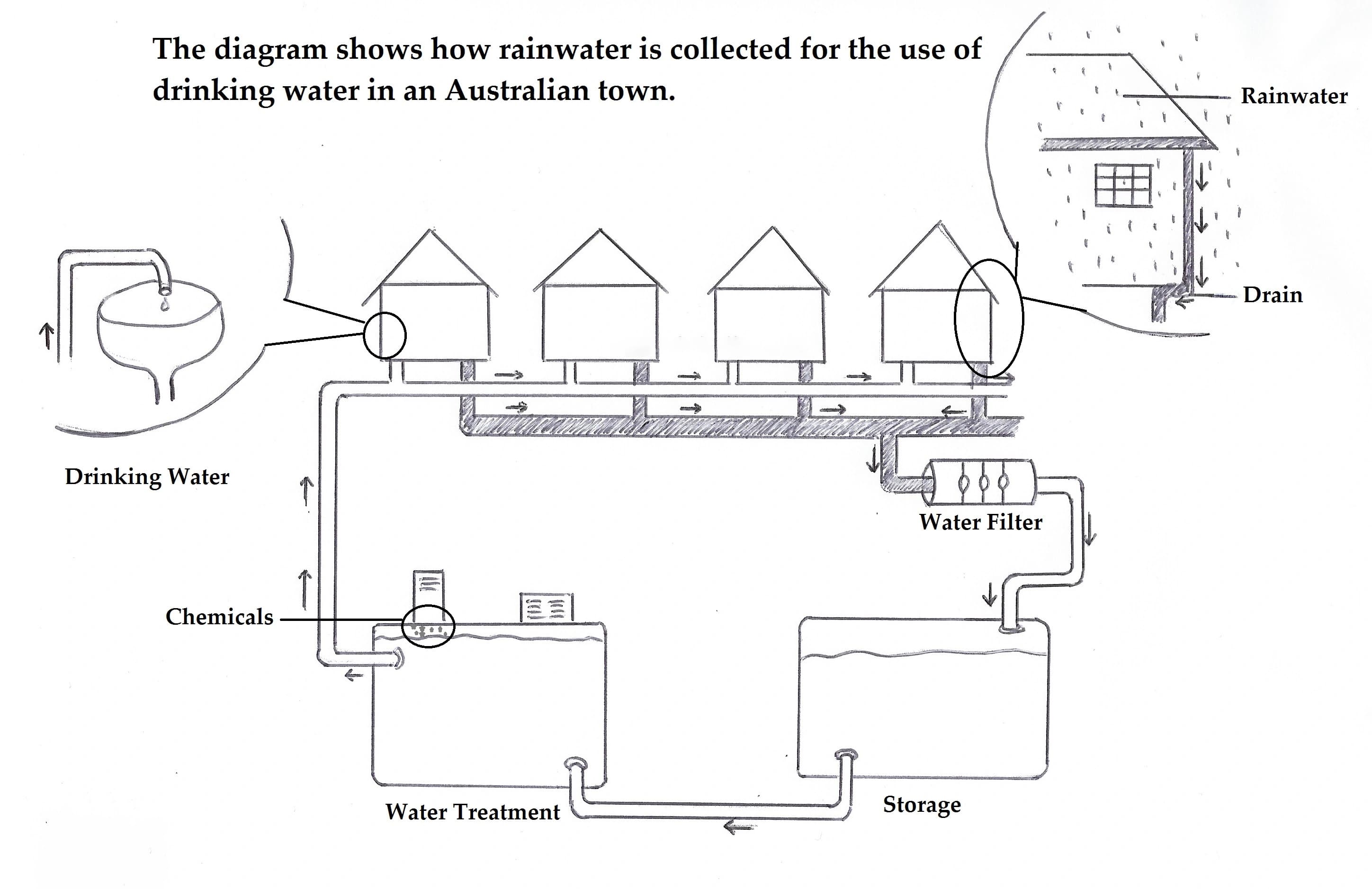
The diagram shows how rainwater is collected for the use of drinking water in an Australian town.
Summarise the information by selecting and reporting the main features, and make comparisons where relevant.
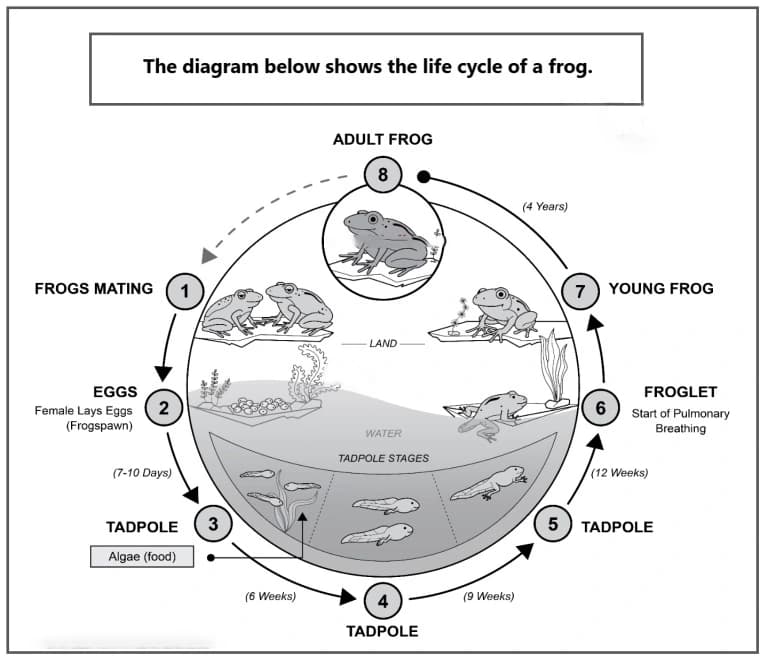
The diagram shows the life cycle of a frog.
Summarise the information by selecting and reporting the main features, and make comparisons where relevant.
Find out what your answer would score
Reading about process diagrams only takes you so far. Paste an answer in and get a band for Task Achievement, Coherence and Cohesion, Lexical Resource and Grammatical Range, with the corrections that would raise it.